

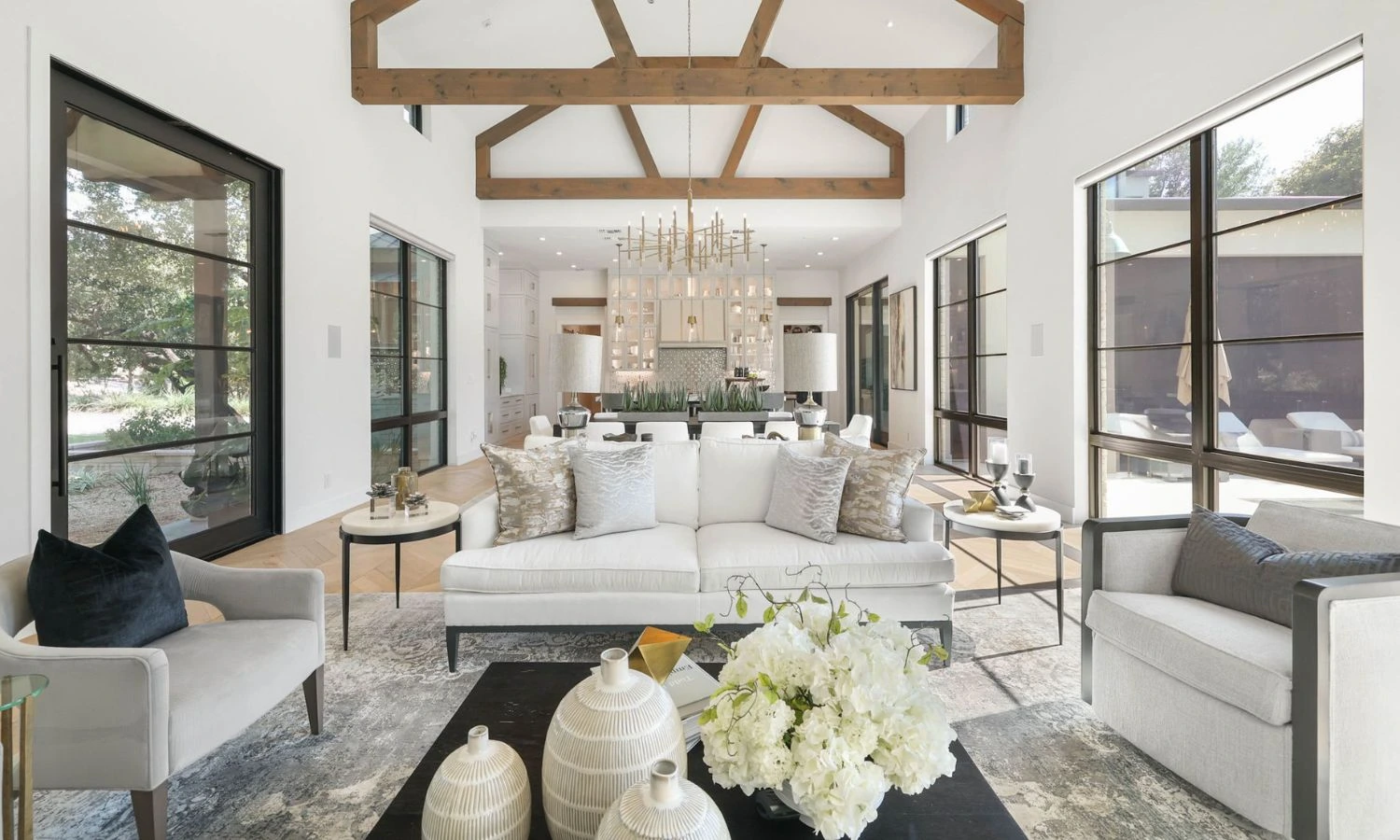
Some of the most memorable luxury homes in San Antonio and the Texas Hill Country have one thing in common: they feel calm. Not empty. Not sterile. Just intentional. The eye knows exactly where to land and everything else supports the story.
If you’ve ever walked into a beautifully remodeled home and thought, this feels expensive-without a single flashy moment demanding attention-you’ve seen restraint at work. In high-end interior design, restraint isn’t about having less for the sake of less. It’s about choosing the right elements (materials, lighting, furnishings, and finishes) and giving them enough space to be fully appreciated.
This matters even more in Texas-style living, where open layouts, indoor-outdoor sightlines, and natural light can amplify both beauty and visual noise. Too many competing finishes, patterns, and focal points can make even a high-budget remodel feel busy-and less sophisticated than it should.
Karen Dietz Interiors (KDI) is an award-winning boutique interior design studio based in San Antonio, TX, serving homeowners in San Antonio, Boerne, Fair Oaks Ranch, and the Texas Hill Country. KDI’s full-service approach helps clients make confident, cohesive decisions from concept to completion-so the final result feels timeless, livable, and deeply personal (not cluttered, trendy, or over-styled). If you’re exploring elevated, Texas-specific luxury interior design details—or want to see what that looks like in real homes—browse the Karen Dietz Interiors gallery.
In a Nutshell: What You’ll Get From This Guide
- How simplicity + balance + thoughtful editing create more sophisticated interiors
- How to apply restraint to Texas lifestyles (open layouts, indoor-outdoor living, family-centered spaces)
- Where local trends fit in (warm natural textures, statement lighting, functional luxury)
- How a full-service design process helps the finished result stay cohesive from concept to completion
Table of Contents
- What Restraint Really Means (and Why It Reads as Luxury)
- Start With a Clear Point of View (So Every Choice Has a Purpose)
- Use a Limited Palette—Then Build Depth With Undertones
- Lean Into Warm, Natural Textures (A Texas-Friendly Way to Keep It Calm)
- Get Scale Right in Open Layouts (One of the Fastest Ways to Look High-End)
- Build Balance Before You Decorate
- Treat Negative Space Like a Design Element
- Choose One Statement Light—Then Edit Everything Around It
- Keep Accessories Minimal (but Meaningful)
- Make Functional Luxury Visible (Especially for Families)
- Create a Cohesive Indoor-Outdoor Story
- Let Craftsmanship Replace More Stuff
- Why Full-Service Design Protects Restraint From Concept to Completion
- A Quick Starting Checklist (So You Know What to Do First)
- Conclusion: Restraint Is a Design Strategy, Not a Style Trend
What Restraint Really Means (and Why It Reads as Luxury)
Restraint is the discipline of creating a clear hierarchy in a space: what’s the focal point, what supports it, and what should be removed because it competes. A restrained room feels luxurious because it feels resolved. Nothing looks accidental, crowded, or almost finished.
In Texas homes-where light is abundant and floor plans are often open-restraint has an added benefit: it helps the home feel calm, connected, and easy to live in.
Common misconception: Restraint equals emptiness. A room can be sparse and still feel unfinished. A restrained room feels complete because quality, proportion, and composition do the heavy lifting.
Quick self-check: If you removed 30% of what’s visible in the room, would it feel better (clearer, calmer) or worse (bare, incomplete)? If it feels better, you don’t need more d’cor-you need a clearer plan.
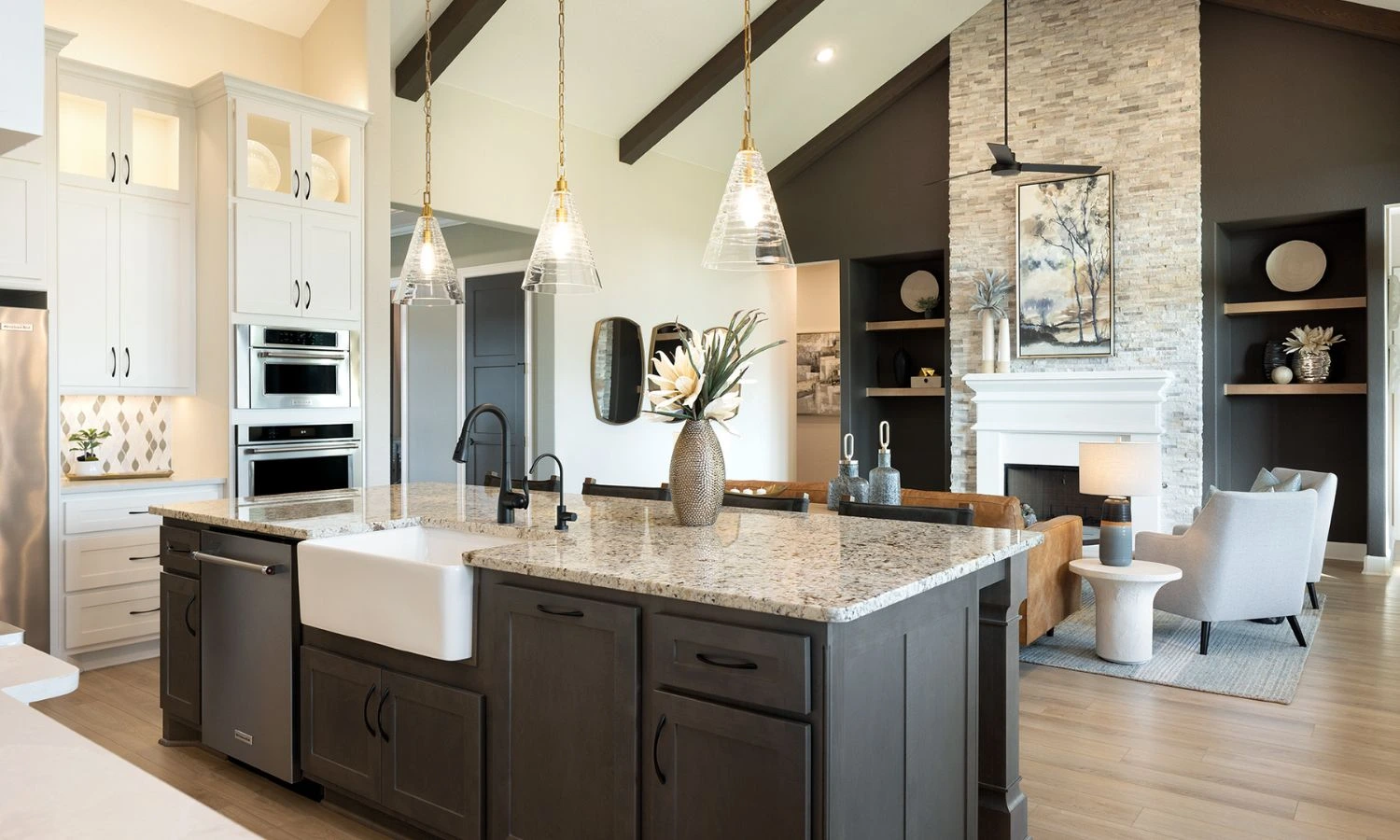
Start With a Clear Point of View (So Every Choice Has a Purpose)
A restrained interior can’t be built from hesitation. Before you choose tile, paint, lighting, or furniture, define the room’s point of view in plain language. When the direction is clear, decision-making gets easier-and you’re less likely to buy pretty pieces that don’t belong.
Try this: Write 35 phrases that guide every decision:
- Warm, tailored, and calm
- Hill Country natural + polished
- Collected, not cluttered
- Family-friendly luxury
- Quiet background with one sculptural moment
What this prevents: mixing too many styles (modern + farmhouse + glam), overusing trends, or choosing finishes room-by-room without a unifying thread. (If you love the Texas blend of refined + grounded, you may also enjoy this take on rustic-modern design.)
Designer move: decide what the room won’t be. For example: not busy, not overly high-contrast, or not shiny. That one line can save you from dozens of off-track purchases.
Use a Limited Palette—Then Build Depth With Undertones
A limited palette is one of the fastest ways to make a home feel cohesive, especially in remodels and open-concept plans. The key is avoiding a flat, matchy look. Depth comes from undertones, finish levels, and materials-not from adding more colors.
What works well in San Antonio and the Hill Country: warm whites, creamy ivories, soft taupes, clay tones, stone grays, camel, and muted charcoals-layered through paint, textiles, and natural materials. (For a current local perspective, see KDI’s guide to warmer color palettes and natural materials.)
Three ways to add depth without adding business:
- Undertone consistency: keep whites either warm (creamy) or cool (crisp) across connected spaces. Mixing undertones can make a home feel unintentionally mismatched.
- Finish contrast: matte walls + a soft-sheen trim; honed stone + brushed metal; linen drapery + leather upholstery.
- Silhouette contrast: clean-lined upholstery paired with one organic element (a curved chair, sculptural table, or arched mirror).
Common mistake: trying to warm up a neutral palette with lots of small accent colors. Instead, warm it up with wood tone, texture, and layered lighting.
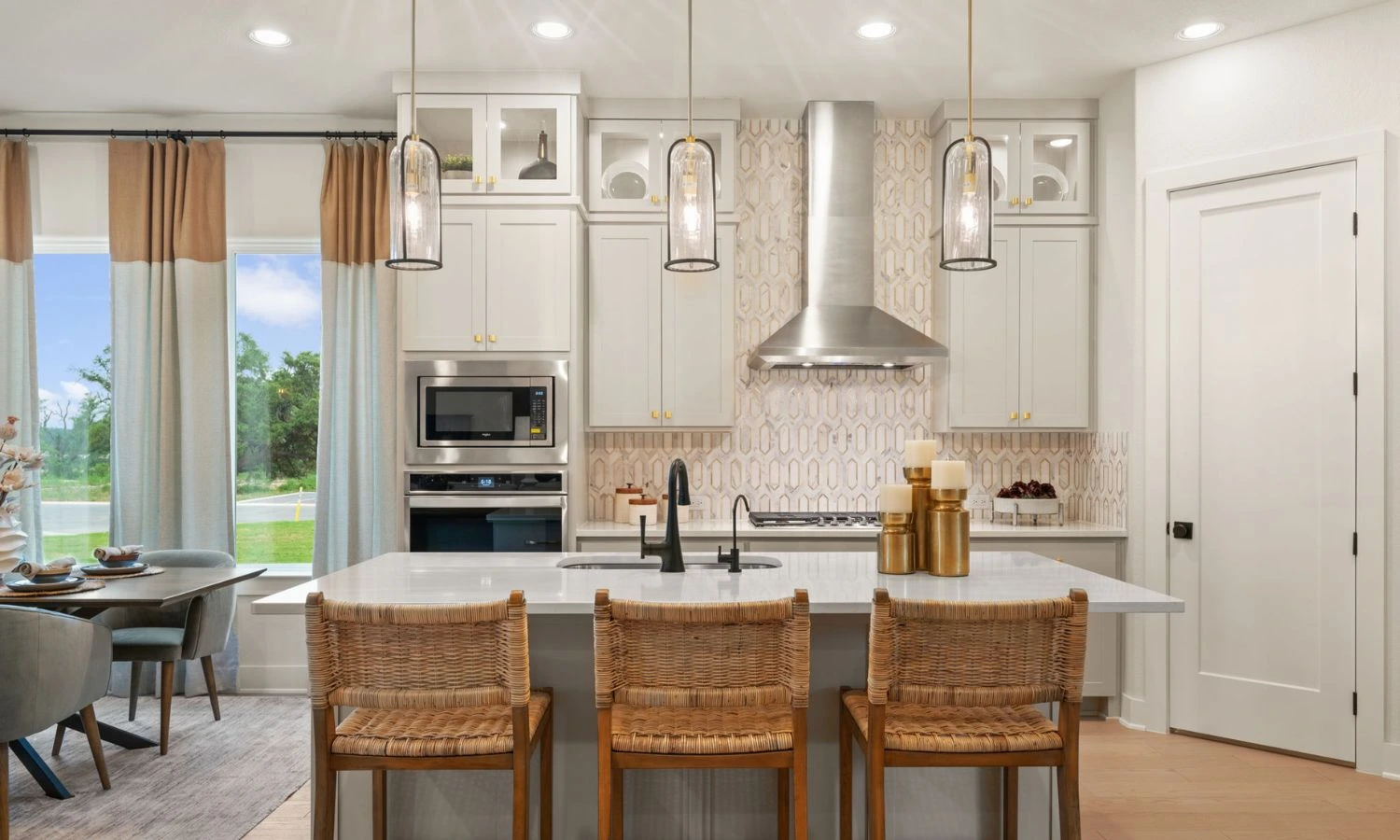
Lean Into Warm, Natural Textures (A Texas-Friendly Way to Keep It Calm)
Local trends are moving toward spaces that feel grounded and livable: warm woods, tactile fabrics, organic ceramics, and finishes that feel hand-touched rather than glossy. This is great news for restraint because texture creates richness without adding visual noise.
Think of texture as your second color. If your palette is calm, texture is what makes it feel intentional and high-end.
Ways to layer warm texture without clutter:
- White oak or walnut cabinetry and furniture (especially effective in kitchens and great rooms)
- Textured wall finishes (limewash, plaster-look, subtle grasscloth in selective areas)
- Wool and linen blends for upholstery and drapery
- Natural stone with movement (used strategically, like a fireplace surround or kitchen backsplash)
- Handmade tile in a restrained pattern (tone-on-tone, not high-contrast)
Quick rule: If you’re adding texture, simplify the pattern. If you’re using a pattern (like a rug), keep surrounding materials quieter.
Get Scale Right in Open Layouts (One of the Fastest Ways to Look High-End)
In many Texas homes, the main living area is expansive and connected to the kitchen and dining space. In an open layout, scale is everything. If pieces are too small, the room feels underfurnished. If everything is oversized, the space can feel heavy and cramped.
Quick checks that instantly improve scale:
- Rug size: large enough that the front legs of key seating sit on it (or fully under seating for a more tailored look).
- Coffee table: substantial enough to hold the seating area (a petite table in a large room often reads as an afterthought).
- Lighting scale: fixtures sized to the table/island/room volume-not just chosen because they’re pretty.
- Art scale: fewer, larger pieces often read more refined than many small ones scattered across walls.
Open-plan restraint tip: define zones with placement, lighting, and rugs-not with extra furniture. The more clearly the layout works, the less you’ll feel you need something else to fill space. For a deeper dive, see KDI’s guide to space planning for open floor plans.
Build Balance Before You Decorate
Balance is what makes a room feel calm before you can explain why. It’s the distribution of visual weight: light and dark, tall and low, smooth and textured, quiet and bold.
Two practical ways to create balance quickly:
- Anchor + soften: pair one grounded element (a substantial sofa, large rug, or stone fireplace) with softer layers (textiles, rounded shapes, warm lighting).
- Repeat, don’t scatter: repeat a finish (like brushed brass or blackened bronze) 23 times across a room instead of using five different metals once each.
Why this matters for restraint: when balance is right, you stop decorating to fix the room. The space already feels settled.
Treat Negative Space Like a Design Element
Negative space is the visual pause around furniture, art, and architecture. It’s what allows beautiful details to register. In high-end interior design, negative space often reads as confidence: it shows the room doesn’t need to prove itself with constant decoration.
Where negative space elevates a room immediately:
- A console styled with one sculptural lamp and one grounded object (instead of a cluster of small d’cor)
- A mantel that lets stone or millwork be the star
- An entry that features one strong piece of art rather than multiple competing frames
- A kitchen with clear counters because storage is planned well
Common mistake: filling every wall and surface because it’s available. If you want the home to feel sophisticated, leave space for the eye to rest.
Choose One Statement Light—Then Edit Everything Around It
Statement lighting is having a major moment in San Antonio-area remodels-and it works beautifully with restraint when it’s treated like sculpture. The key is to make it the hero on purpose, then calm down everything nearby.
Best places for a single strong fixture:
- Dining rooms: anchors the table and creates a sense of occasion
- Kitchen islands: defines the zone in an open plan without adding more objects
- Entryways: sets the tone the moment you walk in
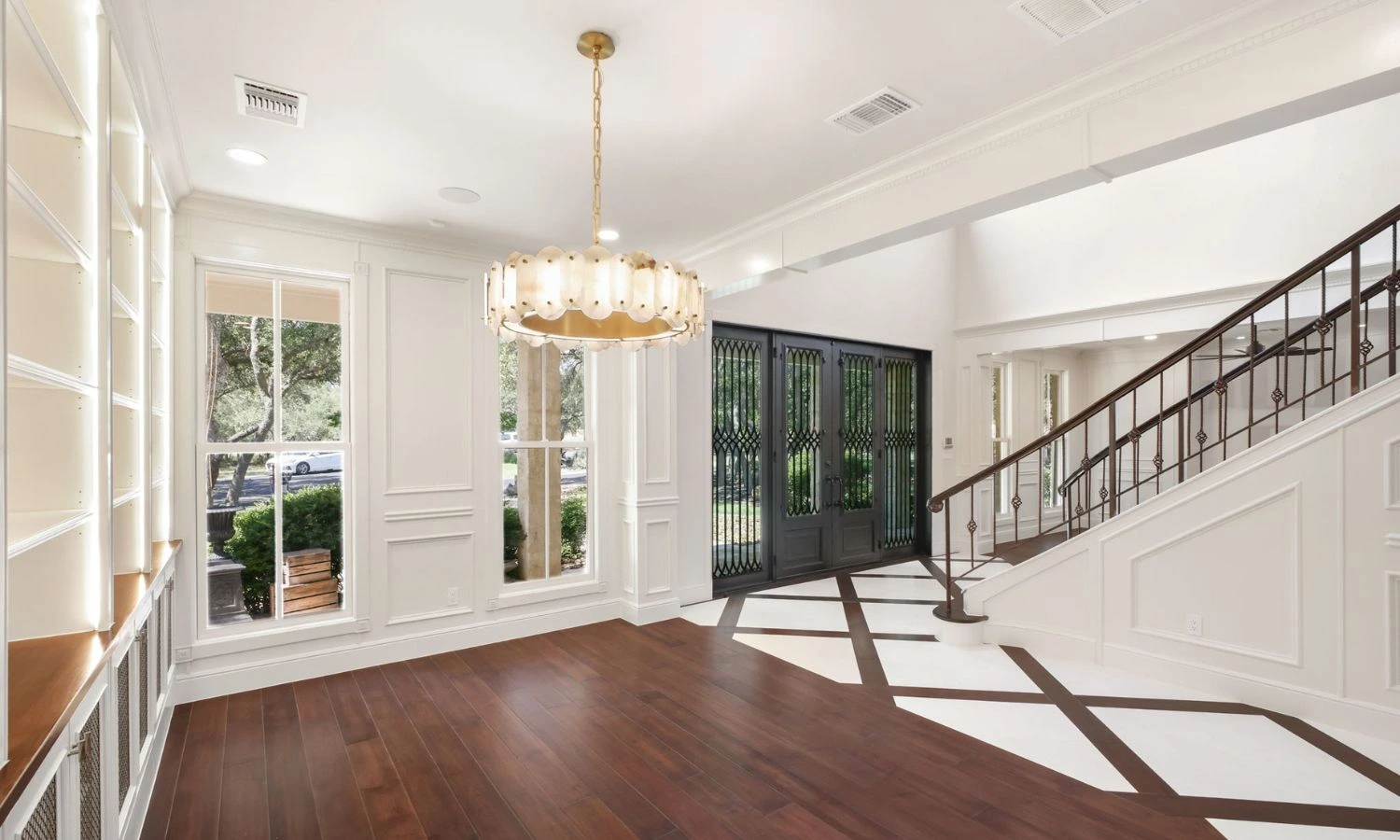
How to keep it refined (not chaotic):
- Keep surrounding finishes quieter (tone-on-tone backsplash, simple cabinet hardware)
- Limit competing vertical elements nearby (multiple tall vases, busy wall art, etc.)
- Use warm bulbs and dimmers so the fixture feels atmospheric at night
Texas lifestyle note: in homes designed for entertaining, lighting is often what makes the space feel polished after dark-even when everything else is simple.
Keep Accessories Minimal (but Meaningful)
Accessories are where good rooms often get noisy. Restraint doesn’t mean you can’t have personal items-it means you choose fewer, better pieces and place them with intention.
A simple rule: if an accessory doesn’t add meaning, contrast, or function, it’s probably filler.
Go-to restrained styling formulas:
- One + one: one sculptural object + one grounded object (like a bowl + a stack of books)
- A small collection: 35 related pieces displayed together, with breathing room (instead of spread throughout the house)
- Greenery with structure: a single branch arrangement or a well-shaped plant rather than multiple small faux stems
Practical benefit: fewer accessories also means a home is easier to maintain-an underrated form of luxury.
Make Functional Luxury Visible (Especially for Families)
Many KDI clients want a home that feels elevated but still supports real life: kids, pets, entertaining, and everyday routines. That’s where functional luxury fits perfectly with restraint.
Examples of functional luxury that still reads high-end:
- Performance fabrics with tailored silhouettes (so the space feels refined, not casual)
- Durable rugs that feel soft underfoot (a comfort detail you notice every day)
- Built-in or discreet storage that keeps surfaces clear (one of the biggest restraint upgrades you can make)
- Finish choices that look elevated but aren’t fragile (honed stone, brushed metals, forgiving paint sheens)
Open-layout tip: plan where everyday items live (mail, backpacks, pet supplies). If you don’t design storage for real life, the room will constantly fight you-and clutter will win.
Create a Cohesive Indoor-Outdoor Story
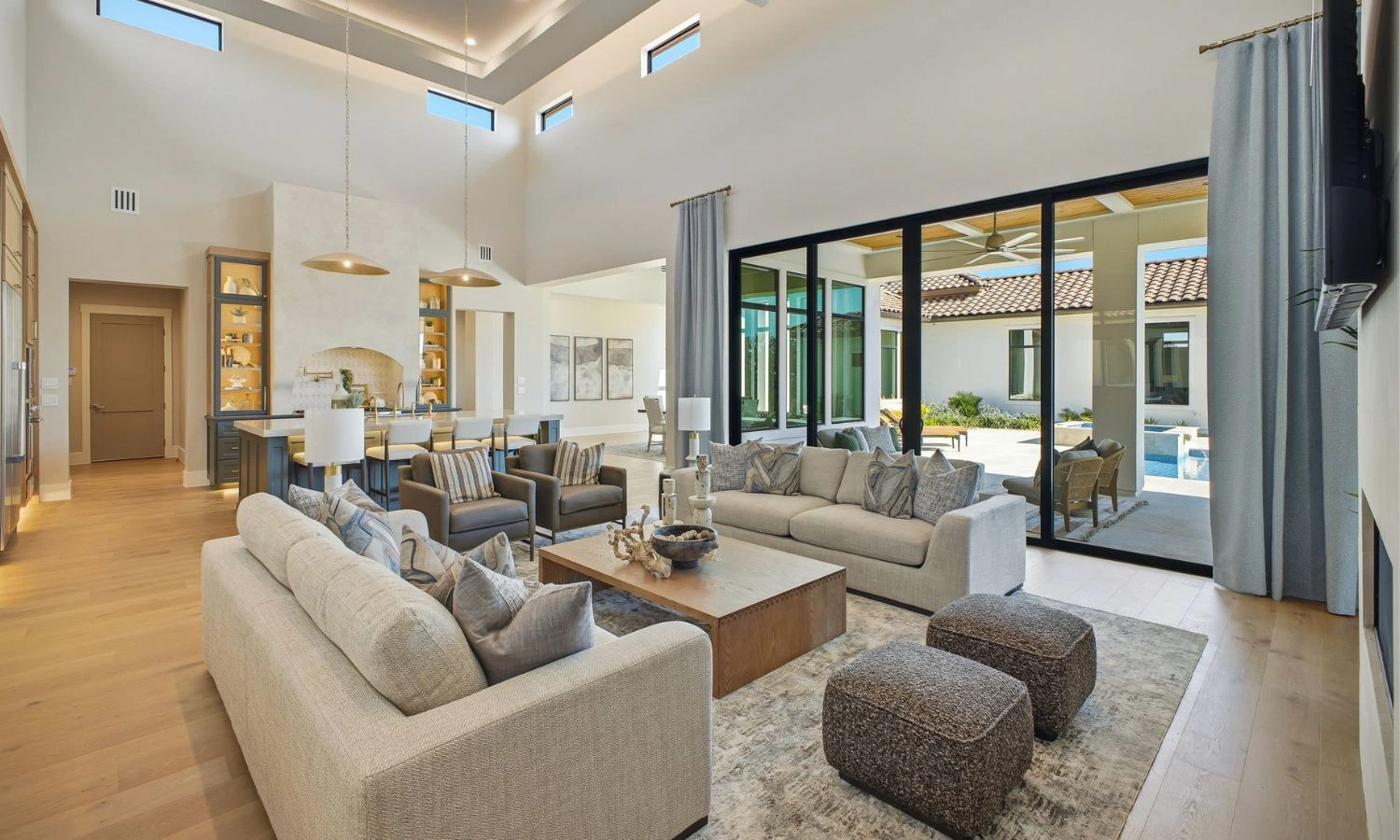
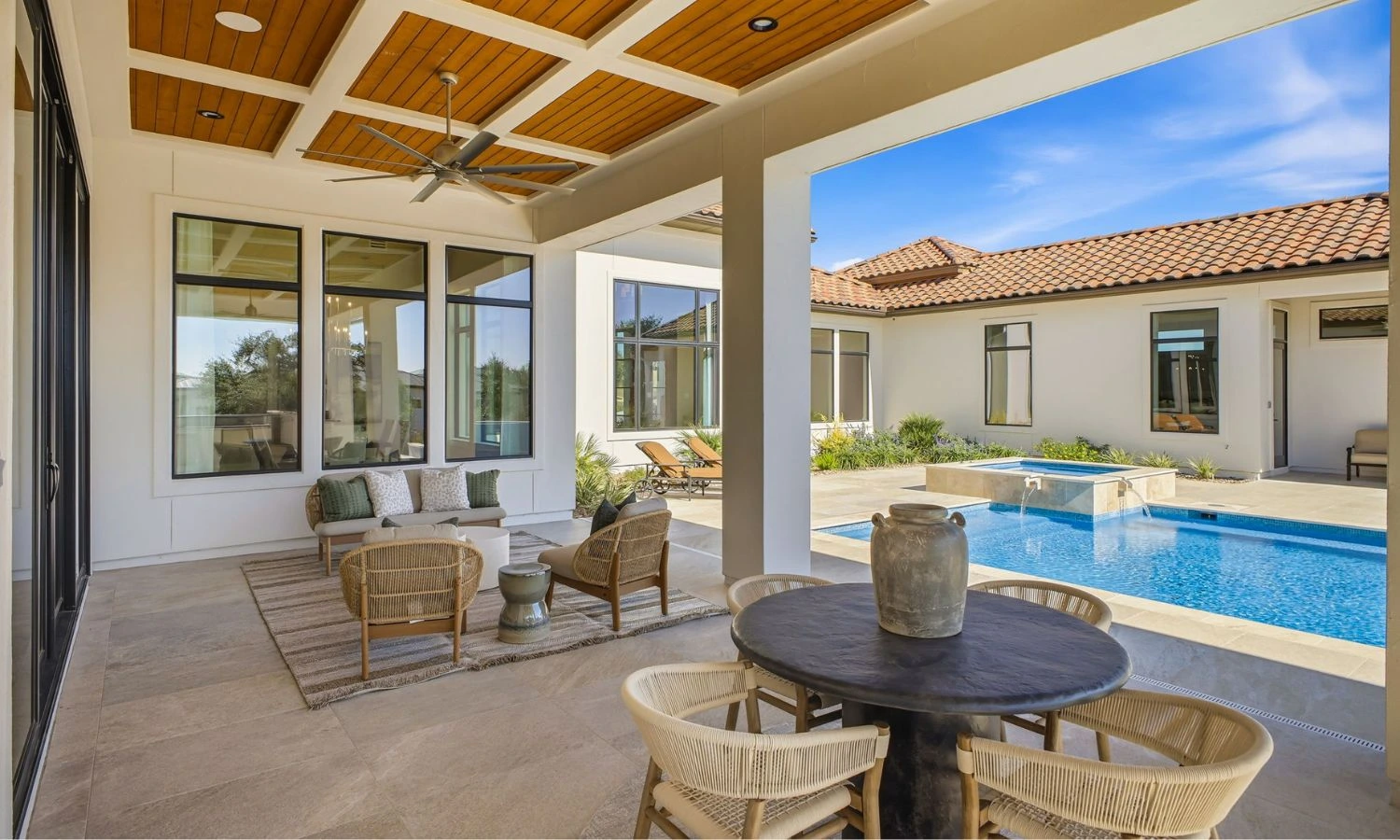
Indoor-outdoor living is a major part of the Texas lifestyle-especially in Hill Country homes designed for hosting. Restraint helps these spaces feel connected (not like separate design worlds).
Simple ways to connect the story:
- Repeat key finishes across boundaries (a wood tone, a metal finish, or a stone family)
- Keep the interior palette calm so views and natural light remain part of the design
- Use texture and shape (not more pattern) to create comfort outdoors
- Mind the sightlines: what you see from the main living area into the patio should feel intentional, not visually busy
Pro tip: treat exterior furnishings like interior furnishings-clean silhouettes, quality materials, and enough negative space for the architecture and landscape to breathe.
Let Craftsmanship Replace More Stuff
Restraint works best when the foundational elements are executed at a high level. That’s where craftsmanship changes everything: custom millwork, tailored upholstery, precise window treatments, and well-considered architectural details.
Why craftsmanship reads as luxury: it shows up in the details you don’t always notice at first-clean lines, proper proportions, aligned seams, consistent reveals, and finishes that feel intentional in natural light.
Where to invest for the biggest payoff:
- Window treatments: properly scaled drapery and tailored shades instantly elevate a room (and improve comfort and privacy).
- Built-ins and trim details: even simple profiles look high-end when they’re executed cleanly.
- Upholstery: a well-made sofa or pair of chairs often does more for a room than a long list of accessories.
Bottom line: you don’t need five decorative layers if your first two layers are strong.
Why Full-Service Design Protects Restraint From Concept to Completion
One of the biggest threats to restraint is decision-making in isolation: selecting a rug before paint is finalized, choosing lighting without considering ceiling details, or buying a great deal piece that doesn’t support the bigger plan.
KDI’s full-service interior design approach is designed to prevent that drift. With space planning and furniture layouts, finish and material selections, custom window treatments, access to trade-only vendors, and guidance for new construction and remodeling, every choice stays connected to the overall concept.
What that looks like in real life:
- Fewer decisions made at the wrong time (which often leads to expensive re-dos)
- A clearer why behind every selection (so editing feels easier, not stressful)
- Rooms that feel cohesive from one sightline to the next
- A finished home that supports your lifestyle-beautifully
Bonus: restraint becomes much easier to maintain when the space is planned well. When storage is right, layouts function, and finishes are coordinated, the home stays calm even as life happens.
A Quick Starting Checklist (So You Know What to Do First)
If you’re trying to bring restraint into your home, start here:
- Define the feeling you want the room to create (calm, tailored, warm, airy, cozy).
- Pick one focal point (architecture, art, a statement light, a material moment).
- Edit what competes with that focal point (especially on walls and tabletops).
- Confirm the palette (limited, warm, and consistent across connected spaces).
- Check scale before buying anything new (rug, lighting, art, main furniture).
- Add texture before adding pattern.
- Layer lighting so the room feels warm at night, not flat.
- Finish with a few meaningful accessories-then stop.
If you want to go one step further, take photos of the space from the main entry points (doorways, hallway approaches). Those sightlines show you exactly where the room feels noisy-and where restraint will have the biggest impact.
Conclusion: Restraint Is a Design Strategy, Not a Style Trend
The most sophisticated homes don’t feel elevated because they have the most things. They feel elevated because every choice supports the whole. When you combine simplicity, balance, warm natural textures, and thoughtful editing, you get a home that feels calm, tailored, and genuinely high-end.
If you’re planning a remodel, new build, or full interior transformation in San Antonio, Boerne, Fair Oaks Ranch, or the Texas Hill Country-and you want high-end interior design that feels livable and effortless-schedule a discovery call with Karen Dietz Interiors to talk through your vision and next steps.