

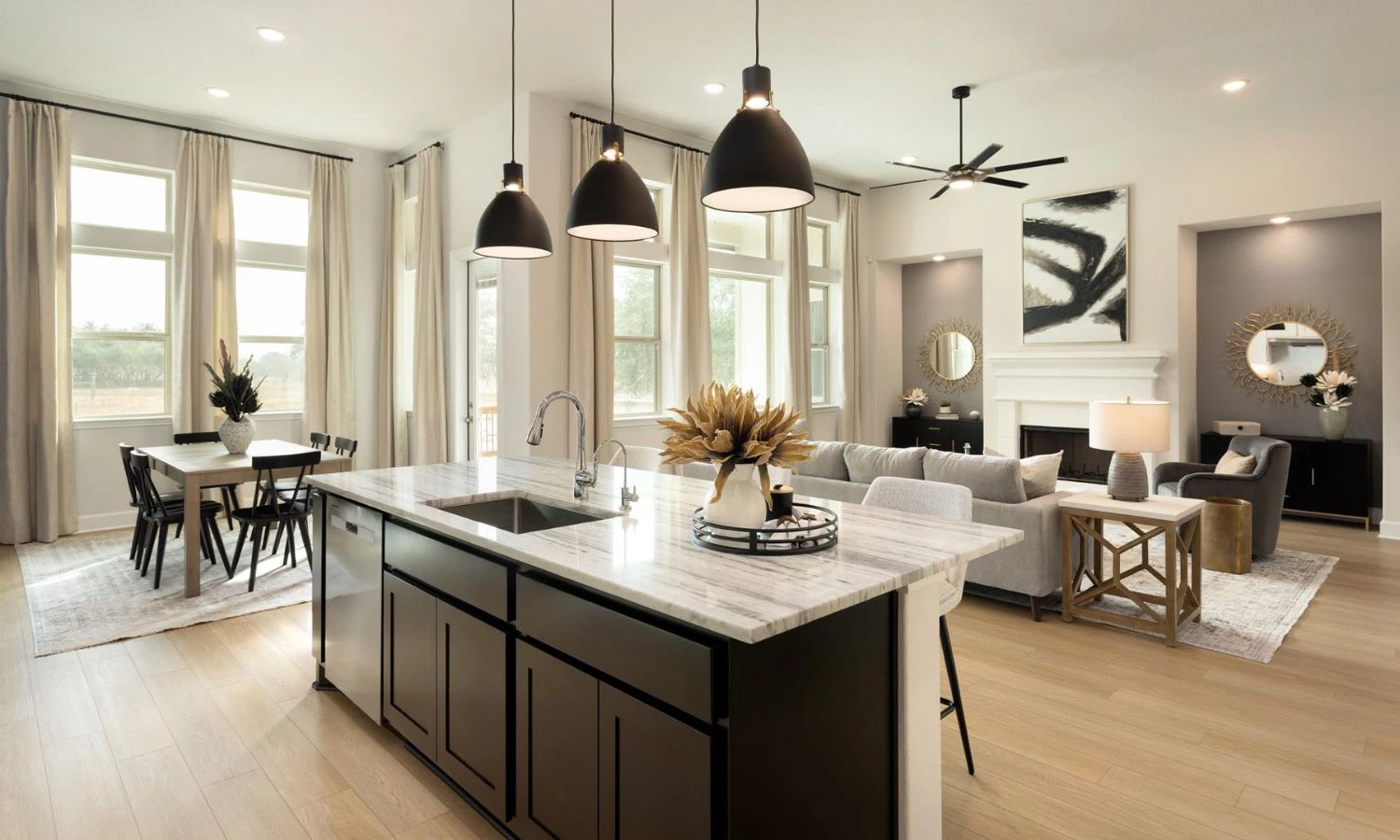
Some homes look big-budget at first glance—and still feel forgettable. Others feel unmistakably elevated even when the details are understated. The difference isn’t about chasing the boldest finish or the most recognizable brand name. It’s about clarity: a cohesive point of view, materials with integrity, and custom decisions that reflect how you actually live.
In this guide, you’ll learn how to create that quietly exceptional feeling through personalization, quality materials, and tailored details—without relying on flashy upgrades. And because design should always be grounded in place, we’ll also call out what tends to work especially well for homes in San Antonio, Boerne, Fair Oaks Ranch, and the Texas Hill Country: warm natural textures, statement lighting used with restraint, and layouts that support indoor-outdoor living and family-centered routines.
If you want more local inspiration, explore KDI’s perspective on San Antonio interior design trends (and Hill Country design direction).
Quick Takeaways:
- Exclusive design is edited. It’s not “more.” It’s fewer decisions—made better and carried through consistently.
- Quality beats quantity. Invest where you touch, see, and use things every day, then keep the rest calm and cohesive.
- Customization creates one-of-one. Details that fit your home’s architecture and your lifestyle can’t be copied from a showroom.
Table of Contents
- Exclusive vs. Expensive: What’s the Difference?
- Step 1: Start With a Clear Point of View (Before You Shop)
- Step 2: Personalize the Layout and the Way the Home Lives
- Step 3: Choose Quality Materials That Look Better With Time
- Step 4: Add Custom Details That Make the Home Feel Authored
- Step 5: Use Statement Lighting With Restraint
- Step 6: Give Open Layouts Hierarchy (So They Don’t Feel Chaotic)
- Step 7: Make Indoor-Outdoor Living Feel Continuous
- Step 8: Design Family-Centered Spaces That Still Feel Elevated
- Common Mistakes That Make a Home Feel Expensive (Not Exclusive)
- How a Concept-to-Completion Process Protects the Vision
- A Simple “Exclusive Home” Checklist
- Conclusion: Exclusivity Comes From Clarity, Not Clutter
Exclusive vs. Expensive: What’s the Difference?
A home feels exclusive when it communicates discernment—through proportion, material integrity, and a cohesive point of view. A home can feel expensive when cost becomes the headline: oversized fixtures, too many competing finishes, or a “showroom” look that doesn’t reflect the people who live there.
A quick way to tell the difference: imagine walking through the home at night, with only a few lamps on. Does the space still feel layered, intentional, and comfortable? Or does it rely on bright overhead lighting and bold finishes to make an impact? Exclusive homes tend to feel composed in any light, in any season, because the design decisions are foundational—not performative.
Exclusive design is usually defined by:
- Intentional editing: every piece has a role, and nothing feels like filler.
- Consistency: materials, tones, and silhouettes repeat in subtle, controlled ways.
- Livability: the home supports real routines without sacrificing polish.
Design pro tip: If you can describe the home’s style in one short sentence (for example: “warm, tailored, and architectural”), it becomes much easier to choose finishes and furnishings that feel exclusive—especially in luxury home design, where options can be endless.
Step 1: Start With a Clear Point of View (Before You Shop)
Exclusivity starts with a point of view, not a product list. Before choosing tile, paint, or lighting, define the home’s design language—the visual rules that keep decisions consistent across rooms and across phases of a new build or remodel.
Define these three anchors:
- Mood: serene, tailored, relaxed, dramatic, warm, airy?
- Palette: a small set of undertones that repeat (creamy neutrals, warm whites, soft contrast, earthy hues).
- Silhouettes: more architectural and clean-lined, or softer and more traditional?
Make it practical: write a three-word brief for your home (for example: “warm / tailored / timeless”). Then use it as a filter. If a finish or piece doesn’t support that brief, it’s likely a distraction—even if it’s beautiful on its own.
Next, create a “repeat list”—the details you’ll intentionally echo throughout the home. Exclusivity often comes from repetition done well.
- One primary metal finish (with one quiet secondary finish, if needed)
- Two to three key wood tones (kept in the same temperature family)
- One signature stone (or one signature tile) used in a few meaningful places
- Textile direction (for example: linen + wool + a touch of velvet, or performance textures with a tailored weave)
If you do one thing: decide what you want your home to feel like at the end of a long day. That emotional target is often the most reliable compass for making refined decisions.
Step 2: Personalize the Layout and the Way the Home Lives
Personalization isn’t a finishing touch. It’s foundational. A home feels truly high-end when the space plan and daily flow are designed around the people who live there—not around a generic model-home formula.
Start by mapping the “friction points” in your current home (or your plans): where clutter collects, where traffic jams happen, where lighting is wrong for real life, where storage is missing, where the family naturally gathers anyway. These are the places where thoughtful design makes the biggest difference—and where exclusivity becomes felt, not just seen.
Ask lifestyle-first questions:
- Where does everyone naturally gather—kitchen island, living room, outdoor patio?
- Do you entertain formally, casually, or a mix?
- What needs to be hidden (paperwork, backpacks, pet gear), and what should be on display (art, books, collections)?
- Which rooms should feel calm and restorative, and which can carry more energy or contrast?
Then translate those answers into design moves:
- Entry that works: a discreet drop zone, closed storage, and lighting that makes arrival feel intentional (not chaotic).
- Kitchen that supports real habits: island seating that’s comfortable, clear prep zones, and storage that reduces countertop clutter.
- Living spaces with a plan: seating arranged for conversation (not just for TV), and circulation paths that feel natural.
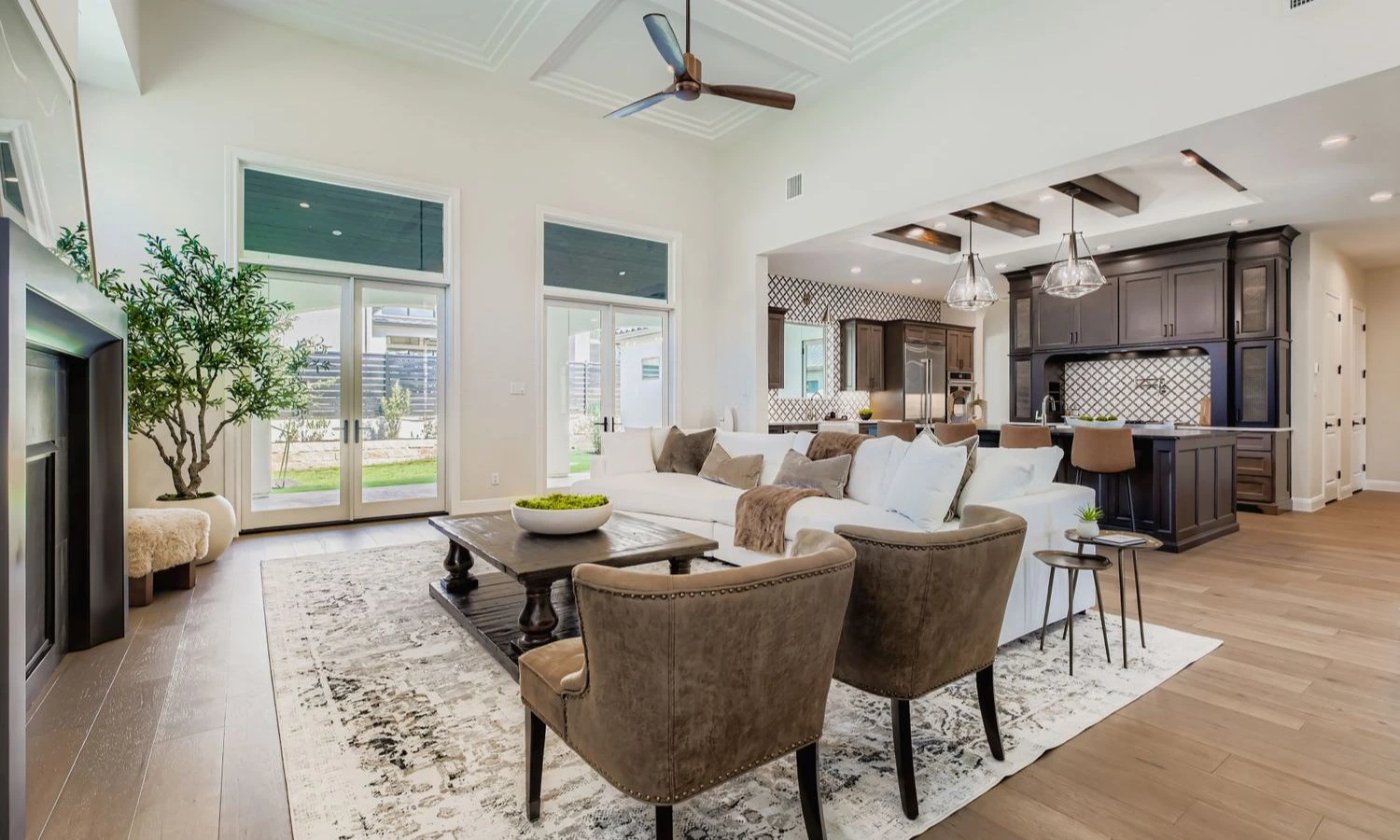
- Primary suite that restores: layered lighting, soft textures, and a layout that feels calm at the end of the day.
If you’re working with an open-concept home, this KDI resource may help: open floor plan space planning in San Antonio.
Local note: In many San Antonio and Hill Country homes, personalization also means balancing open living with moments of privacy—quiet nooks, studies that feel pulled-together on video calls, and guest spaces that feel truly welcoming without being overly formal.
Step 3: Choose Quality Materials That Look Better With Time
Quality materials don’t just elevate a room on day one. They age better—and that longevity is what creates credibility. Think honed stone, substantial wood, layered textiles, and finishes that develop patina rather than showing wear.
“Better materials” doesn’t always mean the most expensive option on the board. It often means choosing the option with the best combination of:
- Texture (depth you can see and feel)
- Finish (how it reflects light—often the quiet difference-maker)
- Consistency (undertones that play well with the rest of the home)
- Performance (how it holds up to daily use in your household)
Where quality tends to matter most:
- Floors: materials and finishes that can handle real traffic and still look intentional.
- Countertops and backsplashes: stone and tile with depth (often honed or textured rather than overly glossy).
- Cabinetry and millwork: construction quality, door style, and hardware that feels considered in-hand.
- Upholstery and drapery: textiles that add dimension and soften large volumes.
Local note: Warm natural textures-wood, limestone-inspired tones, plaster-like finishes, woven materials, aged metals-often feel especially timeless in this region because they connect the home to the Hill Country landscape and light. For more ideas, see luxury interior design features for Texas Hill Country homes.
Design pro tip: If you’re deciding where to invest, prioritize what is closest to your daily life: the seating you sit on, the hardware you touch, and the surfaces you see at eye level. Those details quietly signal quality every single day.
Step 4: Add Custom Details That Make the Home Feel Authored
Custom details don’t need to be flashy to be powerful. They simply need to be specific. When a built-in resolves an awkward wall, a banquette is scaled perfectly to a breakfast nook, or a window treatment is tailored to the architecture, the home starts to feel designed—not assembled.
Think of customization as problem-solving with beauty. The best custom details don’t announce themselves as “custom.” They feel inevitable—like the home was always meant to be that way.
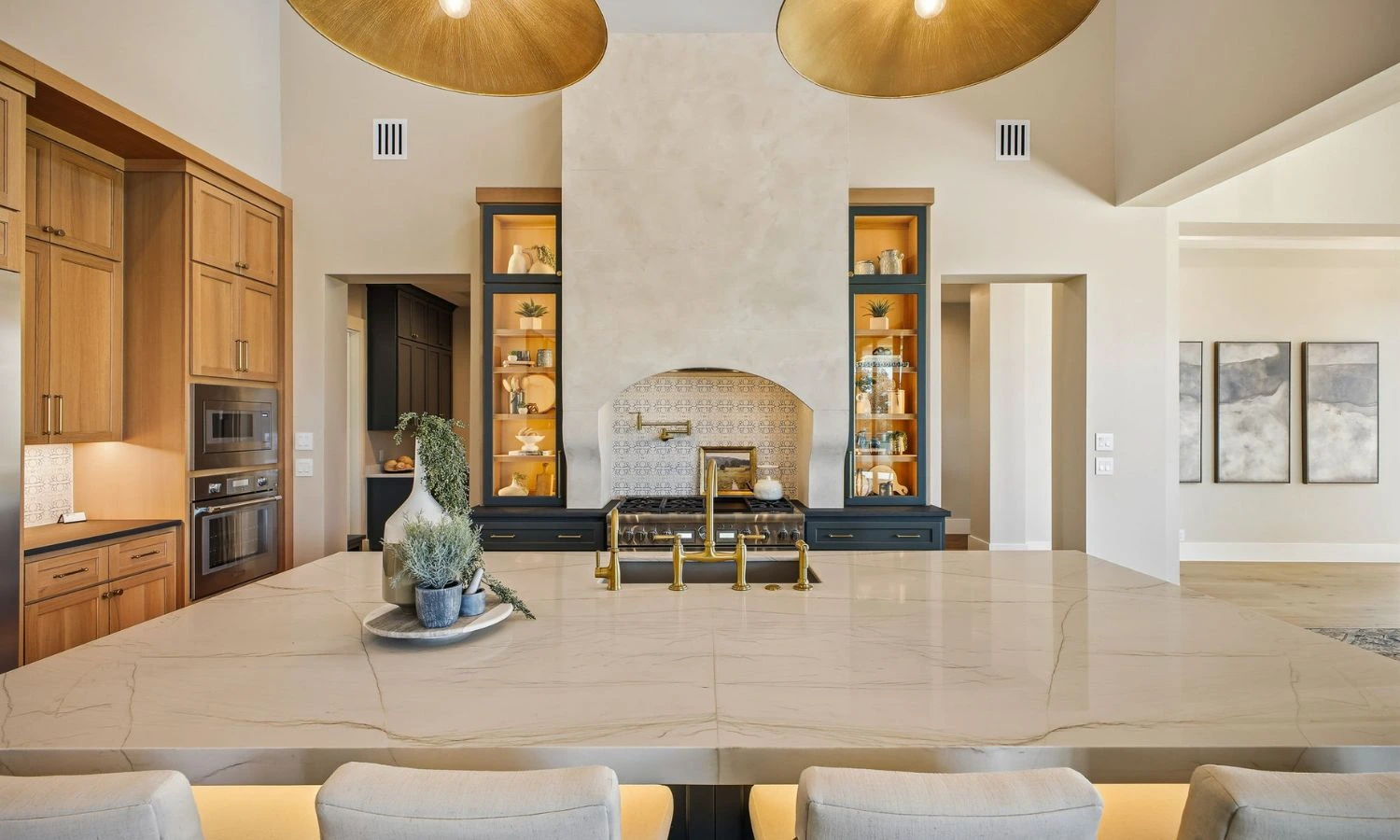
High-impact custom details (that also support function):
- Thoughtful millwork: fireplace surrounds, built-ins, trim profiles, and ceiling details that create architectural presence.
- Tailored storage: entry drop zones, pantry systems, concealed media storage, mudroom cabinetry.
- Custom window treatments: the right scale and fullness can instantly elevate a room and improve comfort.
- Made-for-the-room upholstery: benches, banquettes, or sectionals sized to the space—not the showroom.
Window treatments deserve special attention: in luxury home design, they’re one of the fastest ways to make a home feel finished. Beyond aesthetics, the right drapery and shades add softness, improve acoustics, control light and privacy, and make ceilings feel taller when properly installed.
What makes these feel exclusive: they solve your home’s exact proportions and needs. That specificity gives a space the feeling of being authored, not simply decorated.
Step 5: Use Statement Lighting With Restraint
Statement lighting works when it creates hierarchy. The goal is emphasis, not spectacle. A fixture should relate to the ceiling height, furniture plan, and architecture—and it should be supported by a layered lighting plan.
In practice, refined lighting is less about “finding a pretty chandelier” and more about building an experience—bright and functional when you need it, soft and atmospheric when you don’t.
A refined lighting approach includes:
- Layering: ambient, task, and accent lighting (not just decorative fixtures).
- Dimming: so the home feels as intentional at night as it does during the day.
- Finish continuity: lighting finishes that relate to plumbing and hardware tones.
Where statement lighting tends to work best:
- Entry: one confident fixture that sets the tone immediately.
- Kitchen island: pendants that feel tailored in scale and spacing (and don’t block sightlines).
- Dining: a sculptural piece that creates focus without overpowering the room.
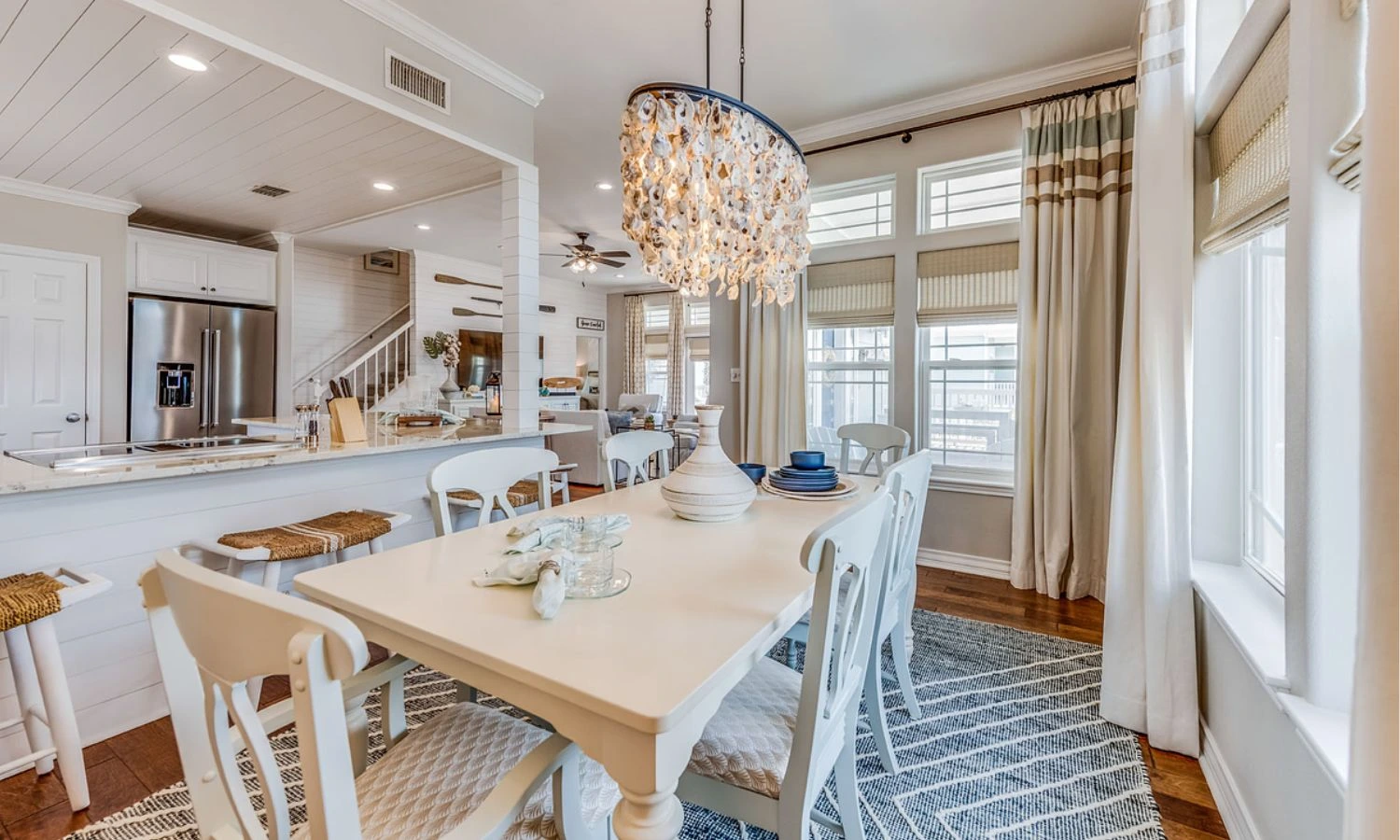
Make it feel intentional: choose one or two places for a true statement, then let other fixtures be quieter—clean, architectural, and supportive.
Step 6: Give Open Layouts Hierarchy (So They Don’t Feel Chaotic)
Open layouts are a staple in many Texas homes, especially for family-centered living and entertaining. But openness only feels luxurious when each area still has a clear identity. Without zoning and hierarchy, even a beautiful open plan can feel visually noisy.
Exclusive open layouts are designed like a well-edited magazine spread: there’s a focal point, there’s breathing room, and the eye understands where to land.
Ways to create “rooms within the room”:
- Rugs and furniture groupings: define zones without closing them off.
- Ceiling treatments: subtle beams, coffers, or ceiling height changes can establish hierarchy.
- Material rhythm: repeat key tones and textures so the eye reads the space as cohesive.
- Acoustic comfort: drapery, rugs, and upholstered pieces prevent large spaces from feeling hard or echoing.
Scale is everything in an open plan: an undersized rug, a too-small coffee table, or lighting that’s out of proportion can make an entire space feel less refined—even if every piece is high quality.
Design pro tip: Decide what you want to notice first when you enter the main living area (a fireplace, a view, a piece of art). Then arrange the room so that focal point stays clear and supported—not competing with everything else.
For a deeper dive on planning open-concept spaces, visit KDI’s open floor plan space planning guide.
Step 7: Make Indoor-Outdoor Living Feel Continuous
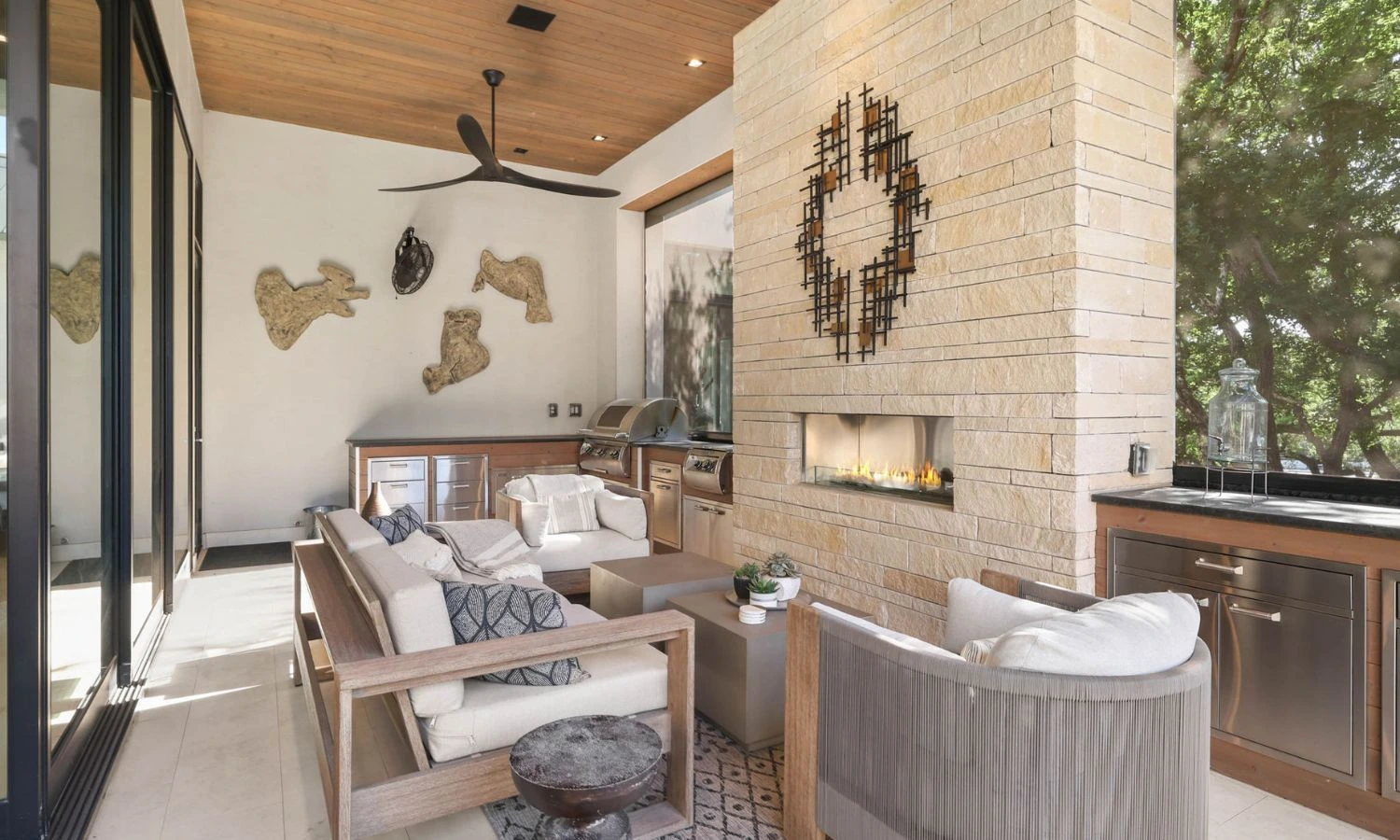
Indoor-outdoor living is one of the most rewarding ways to elevate a home in San Antonio and the Texas Hill Country—when the exterior is treated as part of the overall composition. The outdoor space shouldn’t feel like “separate furniture on a patio.” It should feel like a continuation of the home’s design language.
Start with the view. What you see through your main windows and doors is essentially another “wall” in the room. When the outdoor area is composed—comfortable seating, intentional lighting, thoughtful landscaping—the entire interior feels more elevated.
Make the transition feel intentional:
- Protect sightlines: what you see through a window should feel as composed as an interior wall.
- Use related textures: you don’t need matching finishes, just compatible tones and materials.
- Prioritize comfort: outdoor seating that’s genuinely comfortable reads far more luxurious than furniture that’s only pretty.
- Light the exterior: layered outdoor lighting extends the home’s atmosphere after sunset.
Local note: In our climate, durability is part of luxury. Shaded areas, ceiling fans where appropriate, and performance materials help outdoor living feel effortless—not high-maintenance.
Step 8: Design Family-Centered Spaces That Still Feel Elevated
Durability and sophistication aren’t opposites. The most livable luxury homes anticipate real behavior, then choose materials and layouts that support it. When function is seamless, the entire home feels calmer—and calm is one of the most consistent signals of exclusivity.
When a family home feels “expensive,” it’s often because the rooms look precious—like they can’t be lived in. When it feels exclusive, it’s because the design supports real life while still looking polished.
Refined, family-friendly moves:
- Performance fabrics: for seating that gets daily use.
- Washable rugs (that still look tailored): especially in high-traffic areas.
- Concealed organization: built-ins and closed storage that make resetting a room easy.
- Flexible seating: arrangements that handle movie nights and guests with equal ease.
Storage is design: if a family room feels messy most days, it’s usually not a style problem—it’s a storage plan problem. Closed storage placed where life happens (not across the house) keeps spaces feeling composed.
Common Mistakes That Make a Home Feel Expensive (Not Exclusive)
- Too many focal points: If everything is a statement, nothing feels special. Choose a hero moment, then support it.
- Trend stacking: Layering multiple “of-the-moment” choices can date a home quickly. Use trends as accents, not foundations.
- Inconsistent undertones: Mixing warm and cool finishes without a plan makes spaces feel disconnected. Decide your base temperature and stay disciplined.
- Ignoring scale: Undersized rugs, oversized art, or poorly scaled lighting can make even high-end items feel off. Proportion is the quiet difference-maker.
- Function as an afterthought: Beautiful rooms that don’t live well rarely feel luxurious for long. Comfort and flow are part of the finish.
How a Concept-to-Completion Process Protects the Vision
An exclusive home isn’t built by selecting beautiful items in isolation. It’s created through sequencing, coordination, documentation, and consistent aesthetic judgment—from concept through installation.
Karen Dietz Interiors (KDI) is known for a seamless, client-first process that helps homeowners avoid overwhelm while still achieving a refined result. In practice, that means the design language is established early, then carried through space planning, selections, custom details, procurement, and final styling—so the finished home feels cohesive rather than piecemeal.
Why this matters: when there’s one clear design steward, fewer details fall through the cracks-and fewer small compromises add up to a final result that feels less intentional. Access to trade-only vendors and a coordinated project approach can also help you get the right pieces, at the right scale, with a level of finish that feels truly elevated. To learn more about how KDI supports projects from start to finish, visit KDI’s interior design services.
A Simple Exclusive Home Checklist
- One clear point of view that guides every selection
- A controlled palette with consistent undertones
- Quality materials in the most-used, most-touched areas
- Custom details that solve real needs and fit the architecture
- Layered lighting with dimming and finish continuity
- Zones and hierarchy in open layouts
- Indoor-outdoor continuity in sightlines, materials, and comfort
- Livable luxury that supports the way your household actually functions
Conclusion: Exclusivity Comes From Clarity, Not Clutter
If you want a home that feels exclusive rather than expensive, focus on what can’t be faked: a cohesive point of view, quality that holds up over time, and custom details that reflect your lifestyle and the way you move through your home. When those pieces are in place, the result feels effortless—and unmistakably personal.
For examples of how these ideas come together, explore the Karen Dietz Interiors project gallery.
Let’s talk about your San Antonio or Hill Country home transformation.